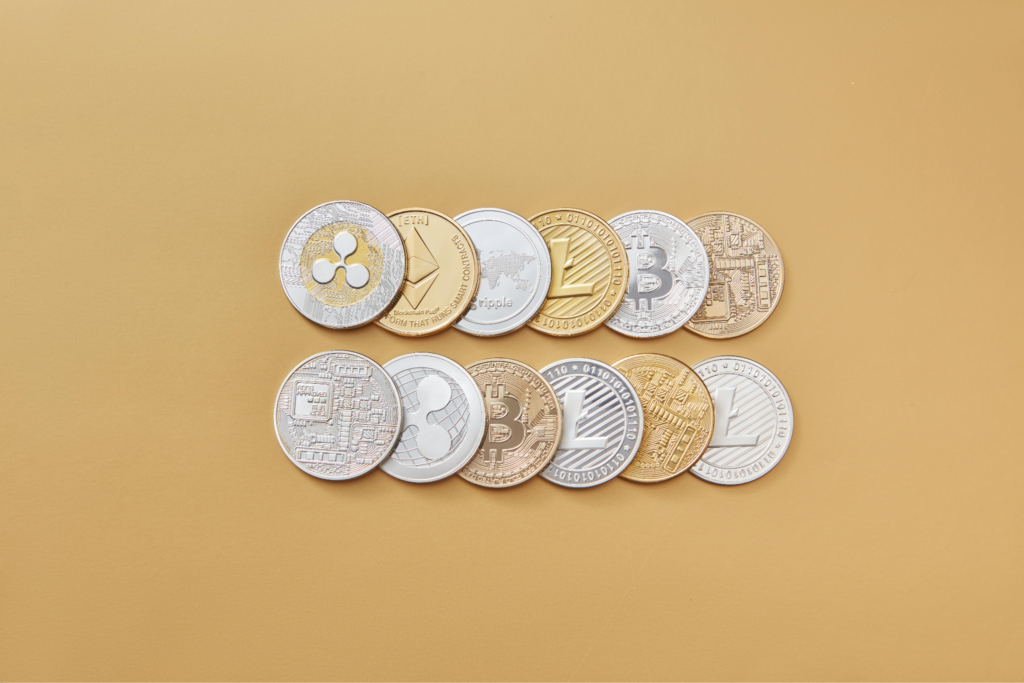
Australia already has a wallet-free route into Bitcoin. Monochrome’s IBTC fund listed total net assets of $150,519,037.10 on 6 May 2026, which tells you this is no fringe workaround tucked away for specialists. At the same time, ASIC’s digital assets guidance was updated on 29 April 2026 and makes a straightforward point: the protections available to Australians depend heavily on whether the product or service sits inside Australia’s financial-services rules.
That gives you a useful starting point. If you want exposure to the bitcoin price but don’t want your first lesson to be about private keys, seed phrases, or irreversible wallet mistakes, an ETF can offer a more familiar way in through the investing system you may already know.
The Broker Button
For many people, the toughest part of buying Bitcoin has never been interest. It has been the operational side; custody, passwords, wallet setup, and the quiet pressure of knowing a simple error can be final.
A Bitcoin ETF changes that entry point because you are buying units in a regulated investment product through a broker, rather than buying and storing the coin yourself. ASIC explains that, in an ETF, the individual unit is the financial product, and that distinction helps because it separates Bitcoin exposure from the burden of handling the asset directly on day one.
That difference is more helpful than it may sound at first. You still carry Bitcoin price risk, but you are spared the immediate responsibility of self-custody, which is often where beginners feel least sure of themselves.
There is something refreshing about starting with the part you understand.
Monochrome states that investors can gain exposure to Bitcoin’s price movements without direct ownership, and that line gets to the heart of why this route appeals to ordinary Australians who want a simpler first step. If you already use a brokerage account for shares or funds, the ETF format meets you in a place that feels more recognisable.
Less Wallet and More Wrapper
The ETF wrapper is worth understanding because simplicity works best when you know what is being simplified. On Monochrome’s IBTC page, the fund reports a management fee of 0.25% a year, says its NAV is calculated daily by State Street, and uses the CME CF Bitcoin Reference Rate Asia Pacific Variant as its benchmark.
That may sound technical, but the idea is fairly plain. You are not learning how to secure a digital wallet; you are leaning on a fund structure that prices the exposure daily and presents it through a standard investment wrapper.
Here is the practical trade-off in one place:
-
You place an order through a broker, which feels closer to buying an ETF or share than navigating a crypto exchange for the first time
-
The fund handles the custody structure and valuation process, so you are not responsible for storing private keys yourself
-
You can judge the product using familiar fund clues such as fees, benchmark design and tracking difference; IBTC’s page showed a tracking difference of-0.0014% on 6 May 2026
That last point deserves a moment. Beginners are often told to focus on price alone, but a better habit is to look at how the product is built and how closely it tracks what it says it tracks.
Monochrome also says the fund follows a strictly passive buy-and-hold approach and does not use derivatives, leverage or short selling. For a newcomer, that restraint is useful because it keeps the product easier to understand and removes layers that can make first-time investing feel more opaque than it needs to be.
For many people, the hardest part of Bitcoin was never the idea of it, but the homework.
Early Door With Not Late Party
It is easy to assume ETFs are old news because Bitcoin has been discussed for years. According to Binance research, spot ETFs are still only 9% of total BTC spot volume, well below the 30% to 40% norm seen in equities, which suggests this access route still has room to grow rather than feeling fully settled and crowded.
That context is useful for Australians because it reframes the ETF as a current on-ramp, not a belated compromise. You are not turning up after the interesting part is over; you are stepping into a format that still appears to be building a larger role in how people gain exposure to Bitcoin.
Binance’s Richard Teng puts the institutional side of that story clearly: “I firmly believe that our global reach, scale, and position as one of the most regulated exchanges in the world give us a meaningful competitive advantage. As the industry evolves, we’re seeing more institutions entering the space and these institutions demand high standards of compliance, governance, and risk management.”
That emphasis on standards lines up with the Australian beginner’s dilemma. Most people do not need maximum complexity on day one; they need a route that lets them learn, participate and stay oriented.
Binance research also indicates that spot BTC ETFs posted their first positive weekly inflow since mid-January at US$787M, a sign that ETF channels still play a meaningful role when confidence begins to return. For you, the value in that signal is not a trading cue. It is a reminder that the ETF route is tied to real demand and is becoming part of how broader participation takes shape.
If access is becoming more structured and more familiar, why begin with the most difficult setup available?
Confidence Before Complexity
A good first step does not have to do everything. It only has to get you moving with enough clarity that you can understand what you own, how you access it, and where your responsibilities begin and end.
That is why Bitcoin ETFs can work so well for Australians who are curious but not eager to become their own custodian overnight. They bring Bitcoin exposure into a format that sits closer to established investing habits, while ASIC’s guidance reminds you to pay attention to where regulation and consumer protection begin.
Rachel Conlan of Binance captures the wider mood well: “In traditional systems, influence is often accumulated over decades through institutional hierarchy. In digital assets, leadership has often been earned through expertise, adaptability and the ability to operate in a fast-moving environment where the rules are still being written.”
You do not need to master every rule before taking a first step. You just need a route that gives you enough confidence to begin; and for many, that route may be the ETF before the wallet, the broker before self-custody and the familiar before the technical.