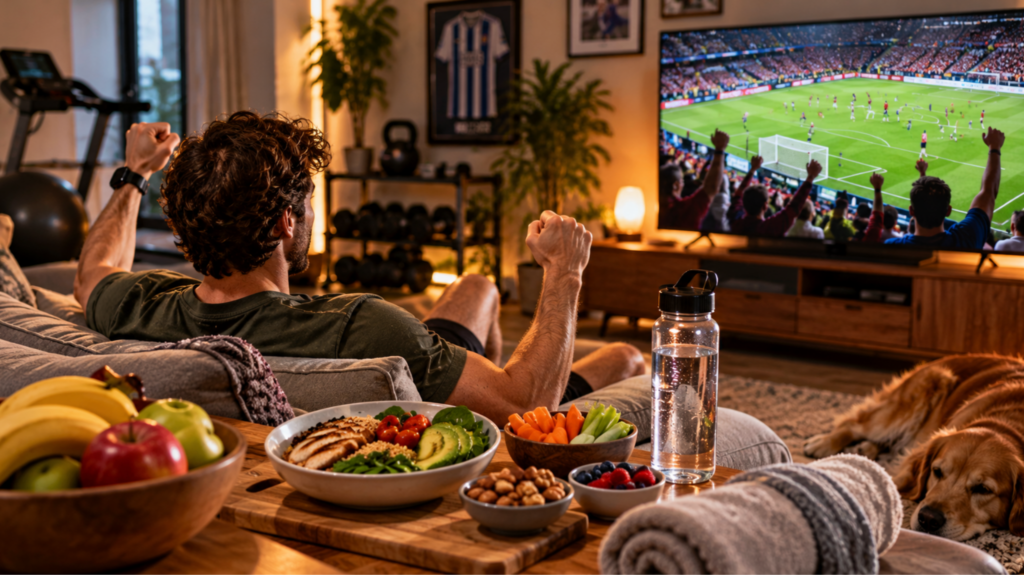
Have you ever thought about your health when you watch sports? When you see a player running for 45minutes, that could make you question your health. You may want to move more, eat better, and get more sleep.
Watching Sport Can Make You Want to Get Moving
Sometimes motivation comes from simply seeing someone else being active. A person watches the Australian Open and feels like playing tennis again. Someone follows a marathon and decides to try a short run the next morning. Kids may watch football and then head outside with a ball. None of this needs a training plan.
Even walking to a stadium instead of driving all the way can add some movement to the day. The same goes for meeting friends for a casual game before sitting down to watch the professionals. For many fans, sport is no longer only something they watch. It gives them a reason to get up and move too.
Game-Day Food Does Not Have to Mean Junk Food
Food is a big part of watching sports. People often eat pizza, burgers, or chips during a big game. What has changed is the range of food people put on the table.
You might now see fruit sitting next to the chips or a bowl of nuts beside the pizza. Some people make sandwiches at home rather than ordering everything. Others simply keep portions smaller. Easy options include:
- Fruit and yogurt
- Nuts
- Popcorn
- Sandwiches
- Vegetable sticks and dips
- Homemade wraps
There is no need to turn match night into a health program. A few lighter choices can simply make a long afternoon of watching sport feel less heavy.
Water Is Probably the Simplest Habit
A football match lasts around two hours once half-time and stoppages are included. A tennis match can go on much longer. It is surprisingly easy to sit through all of that without drinking much water.
Keeping a bottle nearby solves the problem without much thought. It becomes more important when sport follows exercise. If you played basketball in the afternoon and then went home to watch a game or play at a new online casinos australia, you may still need to replace the fluids lost while playing.
Fans inside stadiums face another issue. A hot afternoon outdoors can mean hours in the sun, especially when travel and waiting time are added. Sometimes wellness really is as basic as remembering to drink.
Recovery Can Be Very Ordinary
You do not need an ice bath in the garden. You probably do not need expensive recovery equipment either. For most people, recovery means resting after exercise.
For example, you may feel tired after playing football on Sunday. Your legs are sore on Monday. Rather than doing another tough workout, you take an easy walk and give yourself some time. Nothing fancy happened, but your body got a break.
What Can Recovery Look Like?
For someone who exercises for fun, it may be as simple as:
- Resting after a hard session.
- Taking a gentle walk the next day.
- Drinking water.
- Eating a proper meal.
- Sleeping well.
Everyone needs different recovery. A professional athlete may need more rest than someone who exercises once or twice a week.
Sleep Has Become Part of Sports Culture
Years ago, sports coverage spent far more time talking about training than sleep. That has changed. Athletes now speak openly about bedtime routines, rest, travel, and the effect poor sleep can have on them. Smartwatches have pushed the subject even further by giving ordinary people estimates of how long they sleep each night. Fans have a slightly different problem.
Sport does not always respect bedtime. Some sports events start very late because they happen in another country. They may even last until early morning. Some people watch everything live. Others pick the events that matter most and catch up on the rest the next day.
There is no perfect rule here. The point is simply that sleep is now part of the conversation around being active and feeling well.
Being Healthy Does Not Need to Become a New Sport
There is an odd side to modern fitness culture. Everything can become a competition. Who walked the most? Who slept eight hours? Who ran faster? Who ate the cleanest meal?
For some people, tracking progress is fun. For others, it becomes another source of pressure. Health does not need to work that way.
One person may enjoy running every morning. Their friend might hate running but happily spend three hours hiking on Saturday. Someone else gets most of their exercise from walking the dog. There is room for all of it.