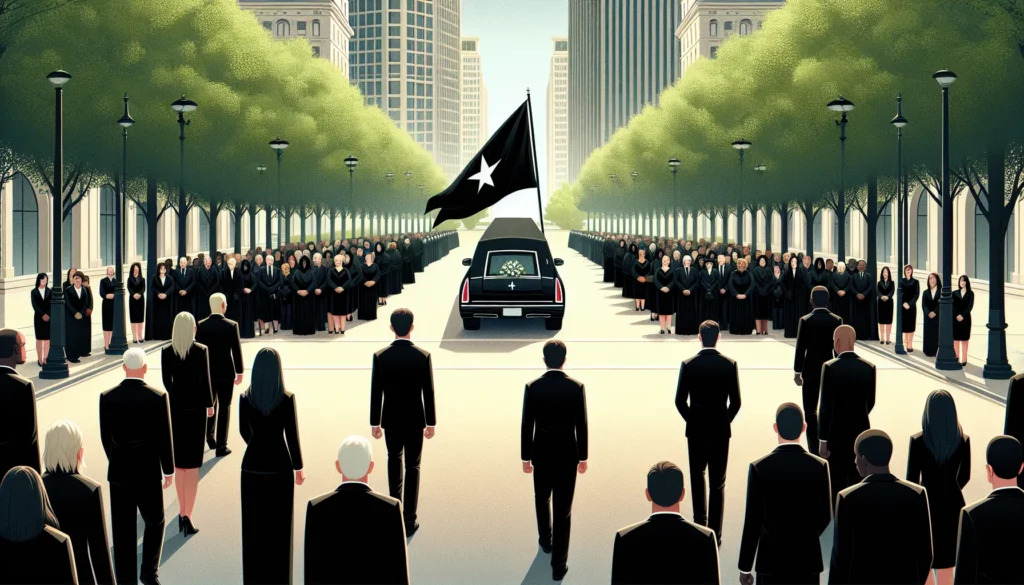
Have you ever found yourself at a somber event, wondering what certain traditions mean? One such tradition is the uitvaartstoetvlag, or funeral procession flag. It’s not just a piece of fabric: it carries deep cultural meaning. We may chuckle at the absurdity of discussing flags in such serious moments, but understanding this one can actually enrich our appreciation of life’s significant transitions. So, let’s unravel the mystery of the uitvaartstoetvlag together.
Uitvaartstoetvlag

The uitvaartstoetvlag is simply the flag used in funeral processions. Typically adorned with colors that symbolize mourning, it’s often displayed on the hearse or during the procession itself. The term originates from Dutch, where “uitvaart” means “funeral” and “stoetvlag” translates to “procession flag.” While it may seem like a straightforward concept, its significance goes far beyond mere fabric in the wind.
This flag represents more than just the departure of a loved one: it’s a visual cue for those who participate in the procession. For onlookers, it conveys respect and calls for a moment of quiet reflection. When we see this flag, we are reminded that we are part of a community, sharing in the sorrow and honoring the memory of the deceased.
Cultural Importance of the Uitvaartstoetvlag
Culturally, the uitvaartstoetvlag holds a pivotal role in many communities. It acts as a unifying symbol that gathers friends and family, extending beyond just blood relations. Think about it: people in mourning often feel isolated, yet this flag connects them with others who share their grief. We’ve seen how such symbols can become a part of communal identity during difficult times.
Throughout history, flags have represented collective values, and the uitvaartstoetvlag is no exception. In many Dutch-speaking communities, it signifies the importance of honor and remembrance. Also, this flag often serves as a means of communicating specific wishes of the deceased or their family, making it a deeply personal element of the funeral rites.
When and How to se the Uitvaartstoetvlag
Knowing when and how to use the uitvaartstoetvlag can feel daunting, but it’s straightforward with a little guidance. Typically, the flag is displayed during the funeral procession, laid on the casket, or flown at the family’s residence. It’s customary for the immediate family to oversee the flag’s presence, ensuring it’s displayed prominently throughout the ceremonies.
We believe that the timing is just as significant as the placement. For instance, unveiling the uitvaartstoetvlag at the start of a procession sets a somber tone and informs onlookers of the event’s gravity. It can be helpful to involve a funeral director in these decisions, as they possess invaluable insight into local customs and traditions.
Design and Symbolism of the Uitvaartstoetvlag
The design of the uitvaartstoetvlag varies across cultures and personal preferences, but certain colors and symbols are commonly used. Black is the prevailing color, signifying loss and mourning. Some families may choose to add portraits of the deceased or specific emblems that represent their life, interests, or beliefs.
Let’s talk symbolism: the flag serves as a banner of love and remembrance. When we see these colors flying, we aren’t just reminded of loss but also of the connection that transcends death. This aspect is crucial: each flag tells a unique story, making the uitvaartstoetvlag not merely an accessory of a funeral, but a narrative tapestry woven with memories.
Common Myths and Misconceptions
Like many cultural symbols, the uitvaartstoetvlag is surrounded by myths and misconceptions. One common misconception is that the flag must always be black. While this is traditional, families today increasingly personalize their flags to reflect the unique personality of their loved ones.
Another myth is that the flag is exclusively for public viewings. In reality, this flag can be quite personal, sometimes more intimate than communal. Some families opt to keep the uitvaartstoetvlag within their home as a badge of remembrance. While the flag’s primary function is to honor the deceased, it can also become a cherished artifact for those left behind.