
A weekend soccer player once told us, “I only started seeing a chiropractor after I got hurt. I wish I’d come in before that.” It’s a comment we hear often, and it reveals a lot about how most people view chiropractic care. Many still associate it solely with pain relief, something you turn to only after an injury.
That view is changing.
A growing number of athletes, both occasional and regular, are starting to include sports injury prevention as part of their regular training. This marks a shift from their earlier mindset of addressing it only after experiencing a lot of pain, or being sidelined by an injury. Instead of waiting for pain to force a decision, they’re integrating movement assessments into their routine, just like they schedule training sessions or recovery days.
This change hasn’t happened overnight.
Why the Shift Towards Prevention?
One thing we’ve noticed in the clinic is that injuries usually don’t happen all of a sudden; they often have a story behind them.
A footballer’s sore hamstring often traces back to restricted hip movement that had been building for months. A swimmer’s shoulder pain frequently connects to reduced mobility through the upper back and rib cage. The body compensates quietly, until eventually it can’t compensate anymore.
Athletes who understand this are increasingly seeking out a sports chiropractor before problems become serious, not after. It’s less about chasing a diagnosis and more about staying ahead of one.
What Does a Sports Chiropractor Actually Do?
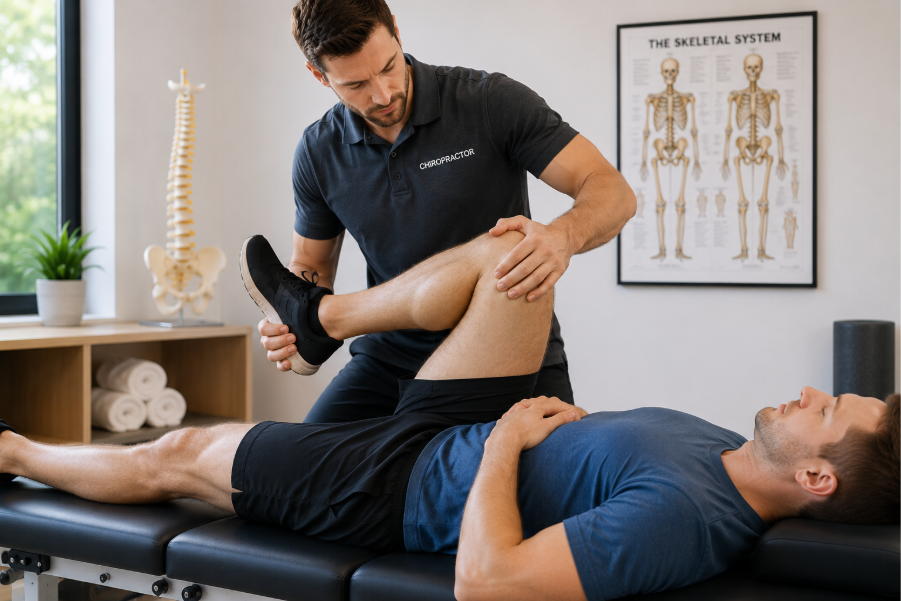
A chiropractor for sports injuries looks at the body differently from what most people might expect. Instead of focusing solely on the painful area, the assessment also examines joint mobility, muscle balance, movement patterns, and posture throughout the whole body.
For instance, if a runner complains of knee discomfort, the assessment might include the ankles, hips, and lower back as well as the knee itself. A tennis player with shoulder tightness may find the examination also looks at their thoracic spine and shoulder blade movement. This broader view helps identify what’s actually driving the problem, rather than simply treating where it hurts.
That said, chiropractic care isn’t the answer for every sporting complaint. Some injuries require imaging, referral to a sports physician or management from another healthcare professional entirely. A good assessment should make that distinction clear rather than assuming every issue belongs on the treatment table.
The Benefits of Seeing a Sports Chiropractor

Patients often ask what they can expect to gain from regular check-ins, particularly if they aren’t currently injured.
The benefits of seeing a sports chiropractor generally include:
- Identifying restrictions or imbalances before they affect performance
- Improving joint mobility and movement efficiency
- Reducing unnecessary strain on overloaded muscles and joints
- Supporting faster, more complete recovery after sports injury treatment
- Raising awareness of sport-specific movement patterns
This doesn’t always translate to an injury-free season. No form of care can promise that. What it can do, however, is help reduce some of the risk factors that quietly build over weeks of training, competing and recovering.
When Should an Athlete See a Chiropractor?
Every time we receive this question (and that happens often), we have a different answer! This depends on every person’s specific case and fitness goals.
Some athletes prefer a proactive check-up at the start of a new season, especially if they are returning from a long break or are ramping up the intensity of their training. Some others might seek a consultation to help with persistent tightness, while some might simply want a professional opinion on whether a minor issue requires treatment.
As a general guide, consider getting assessed if you experience pain that affects your technique, ongoing discomfort during training, limited range of motion that doesn’t improve with rest, or an injury that never fully healed. Waiting until the pain intensifies can lead to longer recovery times, as the body may develop compensatory patterns over time.
Chiropractic Care for Athletes Goes Beyond Manual Therapy
Chiropractic care for athletes typically involves more than hands-on treatment alone. Depending on the findings, a management plan may include joint mobilisation, soft tissue work, movement retraining, load-management advice and a gradual return-to-sport plan tailored to the individual.
Good chiropractor care also means knowing what a treatment plan should and shouldn’t include. Some common causes of recurring injuries include overtraining and rushing back into playing with an incomplete recovery.
Being mindful about these choices is often as important as the hands-on treatment. We often come across patients whose pain subsides within a few sessions, only to return later once they resume their full training. This isn’t due to an unsuccessful initial treatment; instead, it usually results from unresolved root issues like movement patterns, training load, or recovery routines. Bridging this gap is often what makes the difference between a temporary fix and a long-term solution.
Recognising When Something More Urgent Is Needed
Not every sporting injury can wait for a standard appointment. There are some times that warrant urgent medical attention instead of a wait-and-watch approach. Some of these instances can include:
- Sudden and intense pain right after an injury
- A joint that looks visibly deformed
- Inability to bear weight, or move a limb normally
In such situations, please reach out to an emergency chiropractor or your nearest medical facility to receive professional guidance on the next step. Timely assessment can help distinguish between a minor issue and a major one that requires urgent attention.
Finding the Right Support
If you’re looking for a chiropractor in Melbourne or other locations across Victoria, choose a clinic that looks at the body and movement as a whole, instead of just focusing on the painful area.
Ask questions to learn about their approach, and whether they would refer to other professionals if needed. This is the type of honest conversation you need to have, before you narrow down on the chiropractor you want to work with.
Final Thoughts
Sports should be enjoyable, and not cause painful limitations.
Adopting a preventative approach to sports injuries isn’t about changing your training plan completely; it begins with understanding which movements are comfortable for your body and which you generally struggle with. Paying attention to how your body feels and moves before you experience pain is a good practice that can help you in the long run.
Experiencing ongoing pain or aiming to prevent injuries this season?
Schedule a consultation with an experienced sports chiropractor to understand what your body might be trying to tell you.