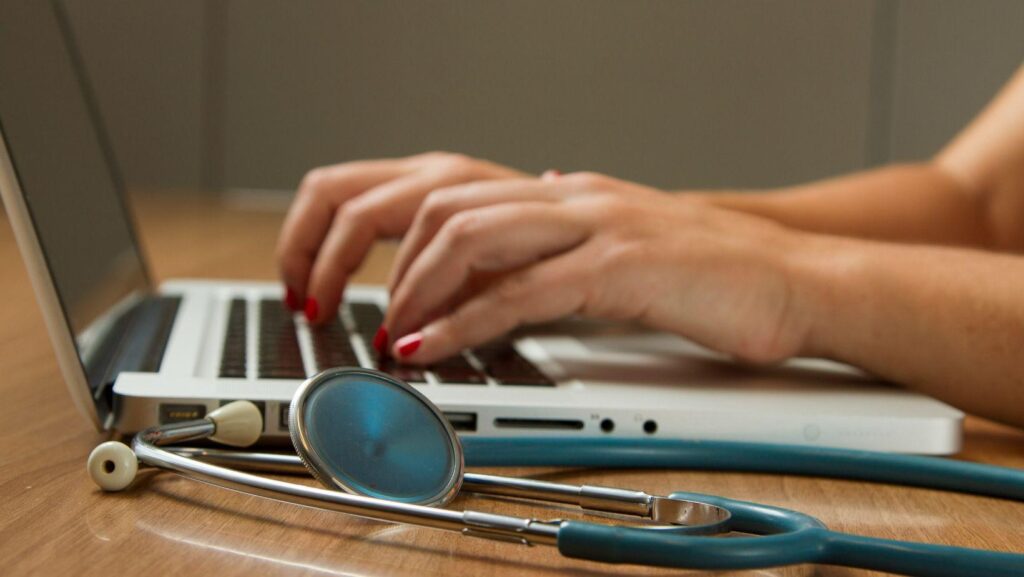
Did you know that over 58% of adults turn to the internet for health information? It is becoming increasingly common to look up symptoms, even before you book that appointment with a doctor.
Sometimes people do this to curb the anxiety that forms when you are feeling unwell and you don’t know what is wrong. Sometimes they do this to explore the signs of illness and understand which specialist they should book to see.
Even when you are not looking up information, it may come to you in the form of articles and social media posts. Some of them are health claims, which lead you to make lifestyle or diet changes or make decisions that may end up hurting your body.
But how to separate the real health claims from the made-up ones? Here’s how you can fact-check health claims you read online.
Identify The Exact Claim
The problem with things we now read online is that the titles or the summary are often blown out of proportion. The presence of exaggeration and clickbait titles and captions should immediately make you aware. Go through the claim thoroughly and check what it exactly claims.
See if the title or the post can be rewritten into an actual, testable claim. Look at the exact thing the entry is claiming, whether it is about a diagnosis, treatment, risk, prevention, or personal experience. See if it can be tested out by you, without actual risk to health.
Once you identify what the actual claim is. When the terms used in the claim include things like “guaranteed treatment” or “miracle cure” or “ real detox,” take the claim with a pinch of salt.
If the claim is saying some miracle ingredient, supplement, or drug can cure multiple unrelated conditions, being skeptical is right. Especially when it’s some product and the producer is pressuring you to buy, there is a high chance that it’s just an advertisement.
If the supplement claims doctors don’t want you to know this claim, or the claim advises you to prescribe treatment, you should know that this will require a lot more evidence to really consider this claim as real.
Check For AI
Every content creator or a business’s content marketing team is using AI for writing articles, blog posts, and social media posts. Whether they are using AI to generate whole articles, reports, posts, etc, there is a huge risk of passing off fraudulent claims as real health news.
This is because AI tends to hallucinate while it generates, especially when asked to produce an output that does not have enough data to back it. So, if you find that the claim you are reading was created by AI, be wary of its authenticity and originality.
Understanding whether something is AI-written is comparatively easy. If the text reads robotic and mechanical, there is a high chance it’s automated. You should also consider using an AI content detector to check whether the article or post you are reading is AI-written.
Even if you are seeing a video on YouTube and are not sure if the content is automated, you can download the transcription and then run it through a detection tool to check for AI. If the claim is AI-written, there is a high chance it is made up.
Verify the Source
The authenticity of the source where you are getting the claim is central to whether it is real or not.
If there is a health claim, like a tested medication for cancer or a supplement that supports a well-known syndrome, the best way to ensure it is real is to see that it is from a “.gov” or “.edu” website. This means that it either came from a government source or from a university’s research and publication.
Alternatively, if the information came from a popular information and news site like Forbes, Healthline, Mayo Clinic, etc, you can be more confident about the authenticity of the claim. These websites are considered authority sites and have a reputation to uphold.
If it is an unknown publication, check which business, person, or organization published it. Check whether the purpose of the post or article is to inform or if it is trying to sell something.
One of the most crucial aspects of verifying a post is to ensure that the party who published it has relevant qualifications. If a content creator is making a health claim, make sure there is actual research and data to back that up. The same goes for every website or social media page you may come across. You must remember that credibility is crucial when it comes to the source; otherwise, you can’t trust a health claim.
Look for Evidence
Remember that health claims, whether it is advice, a supplement, alternative medicine, etc are not business products. Here, testimonials are not enough to back up the claim. You need concrete evidence that it works.
If it is a blog or social media post backed by a research paper, the publication needs to have systematic reviews, clinical guidelines, and well-designed clinical trials.
The research needs to come from sources like government or public health agencies, and not be sponsored by some company selling a product.
When the claim cites a study, investigate the exact claim from the source, check how large it was, and whether the trials were done on only cells and animals, or whether actual human trials took place. A small study or a lab experiment is not enough to prove the safety and efficacy of health claims.
Critically Analyze the Claim
When fact-checking a health claim, remember that trusting one can lead to risky health consequences. Here, your critical analytical skills can protect you from unwarranted risks.
If a post claims that eating clams every day can reduce the risk of brain tumors, your mind should immediately be skeptical of it. Big claims that don’t seem feasible should be scrutinized. You need to be able to spot what sounds plausible and what doesn’t.
However, you also need to remember that AI is good at making plausible-sounding information, so in that case, using a detection tool might be the only way you can truly be sure that a claim wasn’t simply generated by AI.
The smartest thing to do is to take in health claims with a bit of skepticism. If the information is relevant to you, check the source and evidence. Questioning claims and not blindly believing them to be true is vital. You need to have the mental capacity to spot what is likely to be false.
Final Thoughts
Health claims you find online need to be judged and analyzed, with facts and citations checked before you come close to believing them and applying them to your life. You need to have the capacity to understand the risk.
Check what can be tested without much harm and what needs to be fact-checked thoroughly before you apply it to your life.
Remember that any health advice also needs to be reviewed by a doctor before you follow it, and fact-checking before you take it to your physician is vital to test how feasible the claim or a wellness trend might be.