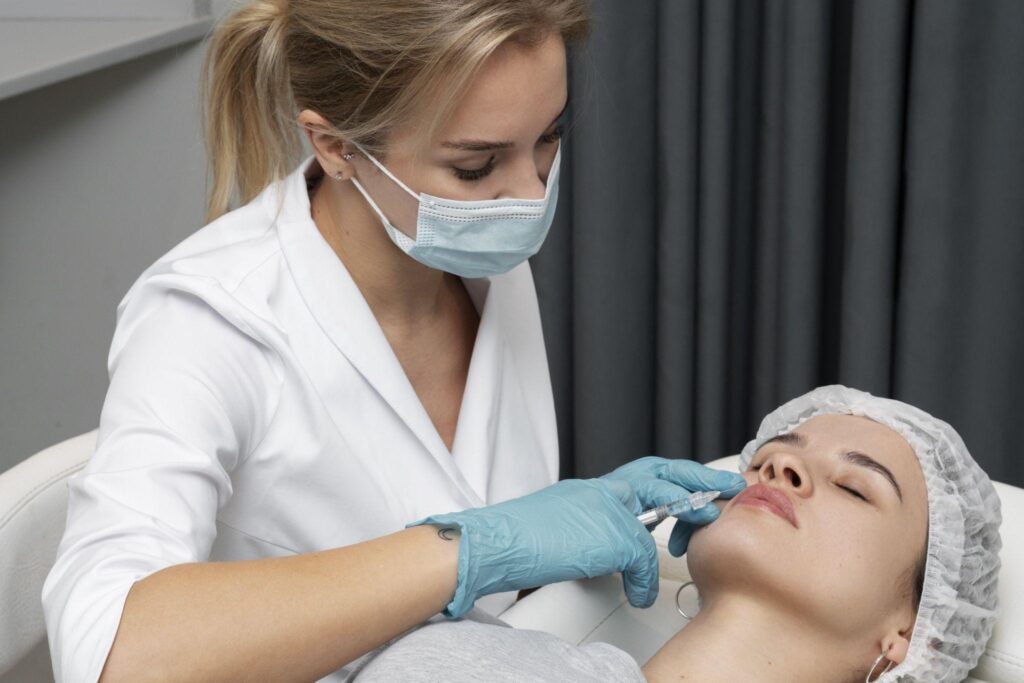
Booking a Botox or filler appointment can feel simple until you realize that not every injector has the same level of training. A registered nurse esthetician brings a clinical background to aesthetic treatments that a weekend-certificate provider simply cannot match. Understanding what separates a qualified nurse injector from an undertrained one can protect both your face and your wallet.
This guide breaks down how nurses move into medical aesthetics, how long that path takes, what the job pays, and what to call the professional standing in front of you with a needle.
Why More Registered Nurses Are Entering Medical Aesthetics
Medical aesthetics has grown into one of the fastest-expanding corners of healthcare. Nurses already understand anatomy, sterile technique, and how to read a patient’s medical history for red flags. That foundation makes the transition into injectables a natural next step rather than a leap.
A nursing license also means accountability. Registered nurses answer to a state board, carry malpractice coverage, and are trained to recognize complications like vascular occlusion, something a non-medical injector may not catch in time.
How can an RN become an esthetician?
The starting point is always the nursing license itself. An RN needs an active, unrestricted license along with clinical experience, ideally in dermatology, plastic surgery, emergency medicine, or a related specialty where hands-on patient assessment is routine.
Building the Clinical Foundation
Before touching a syringe, most nurses spend one to three years working in a clinical setting. This builds comfort with patient communication, informed consent, and recognizing how skin and tissue respond to different conditions.
Aesthetic Nurse Training and Specialized Injector Courses
From there, nurses enroll in aesthetic nurse training programs that focus specifically on facial anatomy and injectable techniques. Quality nurse injector courses combine classroom instruction with live model practice, allowing nurses to perform injections under supervision before working independently. This pathway typically includes formal education, hands-on training, certification, and continued skill development to help nurses build the knowledge and practical experience needed for aesthetic practice.
How long does it take to be a nurse esthetician?
Timelines vary, but most nurses can expect a realistic runway rather than an overnight transformation.
Injector Training for Nurses: What the Timeline Looks Like
Industry estimates suggest around 40 to 60 hours of combined coursework and live-injection practice is a reasonable minimum for basic competency, though more complex filler work often calls for continuing hands-on mentorship well beyond that.
What Qualified Nurse Injector Training Actually Involves
Good nurse injector training goes far past learning where to place a needle. It should build real judgment about faces, not just muscle memory.
Key areas covered include:
How Patients Can Identify a Properly Qualified Nurse Injector
Patients rarely get to see a provider’s training certificate, but a few direct questions can reveal a lot.
A confident, qualified injector will answer these questions without hesitation. Vague or defensive answers are worth treating as a warning sign.
How much do Botox RNs make?
Compensation for nurse injectors tends to outpace typical bedside nursing roles, which is part of why the field has become so attractive. National surveys of aesthetic nurses report average earnings somewhere in the range of $85,000 to $120,000 a year, with experienced injectors in high-demand markets earning more through commission-based or per-unit pay structures.
Income usually climbs alongside experience, client retention, and the range of services a nurse is trained to perform, from neuromodulators to more advanced filler work.
What is a nurse esthetician called?
Titles in this field are not perfectly standardized, which can confuse patients trying to research a provider. Common terms include:
Each of these generally refers to a registered nurse who has completed additional injector training beyond standard nursing education. The title matters less than the training and licensure behind it.
Why Ongoing Education Still Matters
Injectable techniques and safety protocols keep evolving, and a nurse who stopped learning after their first certification course is falling behind. Continuing education keeps injectors current on new products, updated safety guidance, and refined techniques for more natural results.
A few practical limitations are worth keeping in mind:
Choosing a qualified nurse injector ultimately comes down to a mix of licensure, documented training, and a track record of safe outcomes. The next time you consider a Botox or filler appointment, the real question may not be which clinic looks nicest, but which nurse behind the syringe actually put in the hours to get it right.